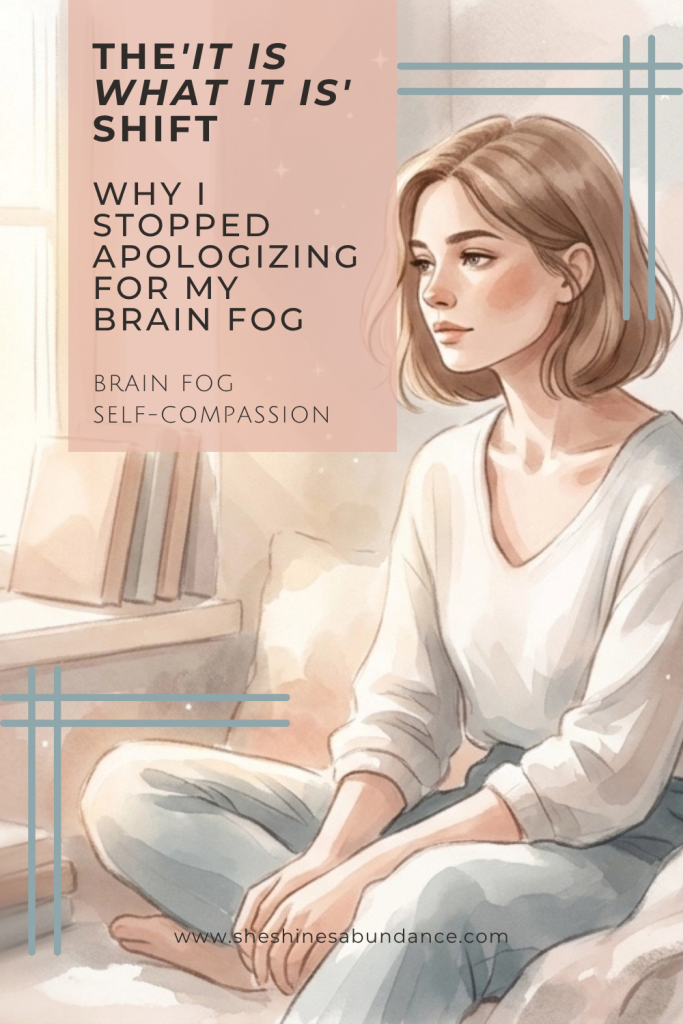
It was 10:00 am on the dot. I was sitting on my lounge, probably staring at a wall or trying to remember if I’d actually took my morning meds, when the realization hit me like a physical punch to the gut. I had an appointment. Right now. With my psychologist. My brain had completely, utterly, and bloody inconveniently wiped the slate clean. No notification, no mental post-it note, just a vast, echoing void where my 10 am session was supposed to be. In that moment of sheer panic, I felt that familiar surge of brain fog self-compassion, or rather, the lack of it.
Disclaimer: I’m not a doctor or therapist; I share trauma-aware insights from lived experience for educational use. Please consult your healthcare team before making changes. This post may contain affiliate links that earn me a small commission at no extra cost to you.
I scrambled. I rang her, my heart doing that frantic little bird-dance in my chest. I stammered through an apology, explaining that my health had been taking a massive dump lately and I’d just…forgotten. She was wonderful, as she always is. She sent me a Zoom link, we hopped on, and we did the work.
But here’s where the magic happened. Usually, the old me would have spent the next three hours, maybe the next three days, reliving every second of that conversation. I would have agonized over whether she was secretly pissed off. I would have drafted ten different ways to apologize again. I would have felt like a flaming hot mess of a human being who couldn’t even manage a simple calendar invite.
Instead, when the Zoom window closed, I took a breath. I looked at the black screen and said to myself: “It is what it is. I had a bad day. End of story.” Then, I closed the laptop and went on with my life.
The Morning I Forgot My Own Brain
When you live with chronic illness or you’re navigating the messy aftermath of trauma, your brain isn’t always your friend. It’s more like a temperamental toddler or a faulty hard drive that occasionally decides to delete critical files. For those of us in the post-survival phase, where we’re trying to build a life out of the wreckage, these lapses feel like personal failures.
We’ve been conditioned to believe that if we just tried harder or got organized, we wouldn’t miss the 10 am appointment. We tell ourselves that our brain fog is a sign that we’re not healing fast enough or that we’re just fundamentally broken. Your brain is dealing with a lot. Between managing pain, processing past trauma, and just trying to exist in a world that doesn’t get it, your cognitive load is maxed out.
Forgetting an appointment isn’t a moral failing. It’s a symptom. It’s a sign that your system is overloaded. And yet, for so many of us, the first instinct isn’t to rest, it’s to fawn.

The Fawning Trap: Why We Over-Explain Our Existence
If you’ve spent any time in trauma recovery spaces, you’ve probably heard of fawn as a stress response. It’s the people-pleasing cousin of fight, flight, and freeze. When we feel like we’ve messed up, especially when that mess up is caused by our illness, we go into overdrive. We over-explain. We apologize until the word loses all meaning. We desperately try to make sure the other person isn’t mad at us.
Why? Because for a lot of us, being a burden or being difficult was dangerous in our past. We learned that to stay safe, we had to be perfect, or at the very least, we had to be incredibly apologetic for our needs.
When I forgot that appointment, the old fawning version of me wanted to send a three-paragraph email explaining exactly how the brain fog felt, why I missed it, and how much I valued her time. I wanted to perform my guilt so she would see I wasn’t lazy. It’s a exhausting cycle of trying to manage other people’s perceptions of us because we can’t manage our own self-worth.
Breaking that cycle means leaning into brain fog self-compassion. It means realizing that you don’t owe the world an itemised receipt of your pain just to justify why you forgot a Zoom call.
Brain Fog Self-Compassion: It’s Not a Character Flaw
Practising brain fog self-compassion is about more than just being nice to yourself. It’s about a radical shift in how you view your disability and your trauma. It’s about looking at that void in your memory and saying, “Right, my system is under pressure. What do I need?” instead of “Why am I so stupid?”
If you’re struggling to find that kindness for yourself, you’re not alone. We’ve been told our whole lives that staying strong means pushing through. I’m here to tell you that’s a load of shit. Staying strong sometimes looks like admitting you’re at capacity and letting the ball drop without hating yourself for it.
I’ve found that having tangible tools helps when the mental fog gets too thick. My Nervous System Reset Cards are designed for exactly these moments: when your brain is short-circuiting and you need a quick, no-nonsense way to ground yourself. You don’t need a 20-minute meditation; you need 60 seconds of real-world regulation.
Resting is a Biological Necessity, Not a Moral Failing
We live in a hustle culture that looks at rest as a reward for hard work. If you haven’t earned it, you don’t deserve it. But when you’re dealing with chronic illness, EDS, FND, or the long-term effects of trauma, rest is a biological requirement. It’s like breathing or hydration.
Your brain fog is often your body’s way of pulling the emergency brake. It’s saying, “I can’t process any more. We are shutting down non-essential systems.” If you fight that brake, you’re just going to burn out the engine.
I used to feel so much shame about parenting from the couch or needing to lay in a dark room because my brain felt like static. I felt like I was failing my kids and my business. But the truth is, I’m a better mum and a better writer when I actually listen to the fog. When I stop apologizing for the fact that my battery only charges to 30% most days.
You are not lazy. You are not unreliable. You are dealing with a body and a mind that have been through hell. If you need to stay in bed, stay in the damn bed. The world won’t end, and if someone is mad about it, that’s their baggage to carry, not yours.

Breaking the “Mad at Me” Cycle
That post-session spiral, the one where you relive every word you said, wondering if you sounded too much or if you annoyed the person: is a classic trauma symptom. It’s hyper-vigilance disguised as reflection.
When I closed that laptop after my session, the spiral started to spin up. “Did I sound ungrateful? Was I too blunt about the brain fog? Does she think I’m making it up?”
But I caught it. I used a bit of that brain fog self-compassion I’ve been working on. I reminded myself that my psychologist is a professional who understands trauma. More importantly, I reminded myself that even if she was annoyed (which she wasn’t), it wouldn’t be the end of the world.
Learning to exist in the mess of a bad day without needing to clean it up for everyone else is where the real healing happens. It’s about building a support network that actually gets it, and more importantly, becoming your own strongest advocate.
The “It Is What It Is” Shift
The phrase “it is what it is” gets a bad rap. People think it’s dismissive or passive. But for me, it’s a powerhouse of a mantra. It’s a way of cutting through the noise of self-blame.
“It is what it is” means:
- I have a chronic illness.
- My brain fog is currently high.
- I missed the start of an appointment.
- I am still a worthy, capable human being.
This shift didn’t happen overnight. It’s taken years of dealing with invisible illness isolation and realizing that nobody is coming to save me from my own guilt. I had to do that myself.
When you start to apply brain fog self-compassion to your daily life, the world gets a little quieter. The pressure to perform wellness starts to fade. You stop being the person who apologizes for existing and start being the person who simply exists, mess and all.

You Are Not Broken
If you’re reading this while sitting in the middle of a cognitive cloud, wondering where your day went or why you can’t remember the name of that thing you need from the shops: breath.
You aren’t weird. You aren’t too damaged. You’re just a person whose system is doing exactly what it needs to do to keep you safe. The fog isn’t the enemy, the shame we attach to it is.
Start small. The next time you forget something or feel that amnesia kick in, try not to launch into a ten-minute apology. Just say, “I’m having a high-fog day, thanks for your patience,” and leave it at that. No over-explaining. No fawning. Just the truth.
If you need a bit of extra help navigating the chaos, I highly recommend checking out our Calm in Chaos Deck Set. They’re the perfect companion for those days when your brain is offline but your heart still needs a bit of holding.
So, tell me: when was the last time you had an “it is what it is” moment? Did you close the laptop and let it go, or are you still reliving the conversation? Let’s chat in the comments.
I shared a much deeper, more personal look at this over on Substack – including the parts that were too raw for the blog. You can read the “Unfiltered Version” HERE.

If this hits you hard….
You’re exactly who I write for. You don’t have to go through this alone.
- Download my FREE 60 Second Nervous System Reset Cards
- Join our newsletter – fill out the form below
- Join us on Substack for real, day-to-day life updates and get new blog posts sent straight to your inbox first.
- Save this post on Pinterest so you can return to it on tough days 👉