
I’ve sat on the couch with notes scattered around me, half-finished symptom logs open, medication lists in two different places, and that sinking feeling in my chest that said, I cannot keep doing this shit. Symptom tracking for chronic illness can sound simple when people talk about it online. In real life, it can feel like a bloody part-time job you never applied for. It is not that tracking can’t help. It’s that when you live with chronic illness, trauma, exhaustion, and medical brain fog, even helpful systems can become one more layer of pressure on an already overloaded life.
There were days when I had papers on the couch, notes in my phone, a random list shoved in my bag, and medication details floating around in my head like I was somehow meant to hold it all together through sheer willpower. That’s the part people don’t always see. Symptom tracking for chronic illness is not just jotting down a few symptoms. It is remembering patterns, timelines, medications, side effects, questions, specialist names, and all the tiny details that seem to matter the second you’re sitting under fluorescent lights trying to explain yourself.
Disclaimer: I’m not a doctor or therapist; I share trauma-aware insights from lived experience for educational use. Please consult your healthcare team before making changes. This post may contain affiliate links that earn me a small commission at no extra cost to you.
For a long time, I thought the answer was to try harder. Be more organised. Use a better app. Make cleaner notes. Keep a more detailed record. Surely if I was good enough at tracking, appointments would go better and doctors would finally understand the full picture.
That sounds nice in theory. In real life, it often made me more overwhelmed, more ashamed, and more convinced I was somehow failing at being sick properly.
That shame sticks. It gets under your skin. You start thinking the problem is you, when really the problem is that managing chronic illness admin takes a ridiculous amount of energy. It is admin hell with a side of fear. It is paperwork mixed with pain. It is trying to be your own case manager while also being the person living in the body that is struggling.
And if you’ve ever had that same spiral, you are not broken. You are not lazy. You are not dramatic. You are a person trying to manage too much with a nervous system that is already carrying enough.
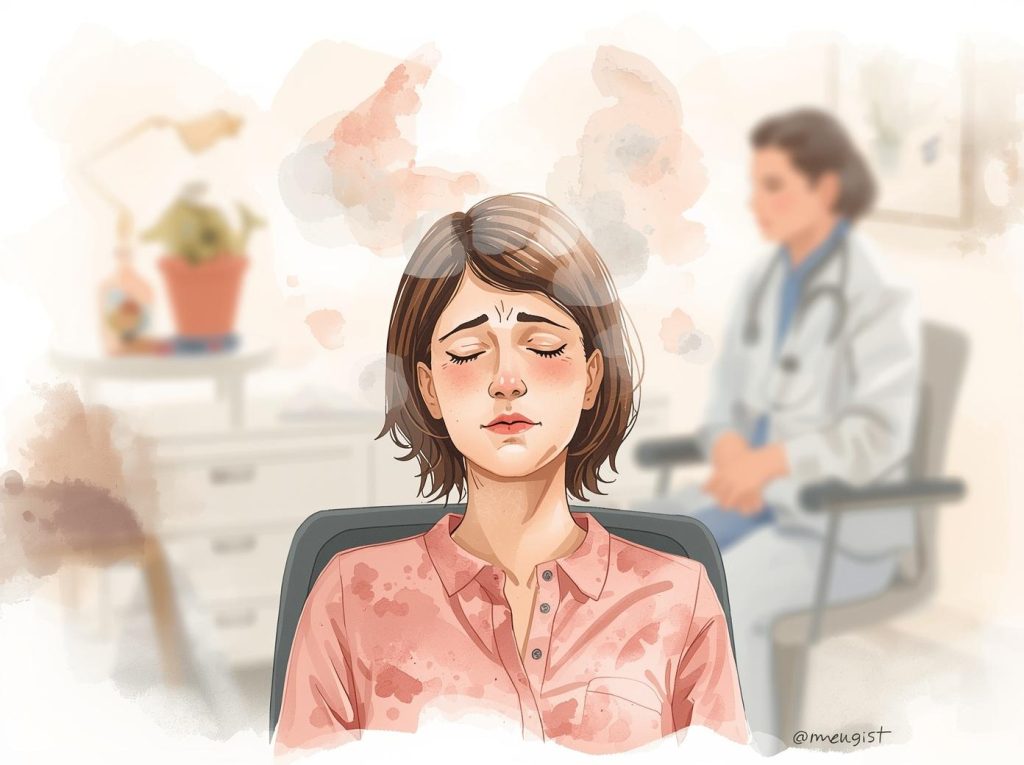
When symptom tracking for chronic illness turns into admin hell
There is a point where symptom tracking for chronic illness stops feeling supportive and starts feeling like admin hell.
You know the kind. You’re meant to remember:
- every symptom
- when it started
- how long it lasted
- what made it worse
- what made it better
- every medication
- every dosage
- every side effect
- every question you wanted to ask
And somehow you’re meant to do all that while actually living inside the body that is struggling.
That was the breaking point for me. Not one dramatic movie scene. Just the slow build-up of trying to hold too much information in a brain that was already overloaded. I’d start tracking with good intentions, then miss a day, then a few more, then feel guilty, then avoid it altogether because the whole thing felt too big to restart.
That is chronic illness burnout. It’s not a lack of discipline. It’s what happens when a system asks more from you than your body and brain can realistically give.
And the worst part? A lot of the advice out there still assumes you have endless capacity. Colour-code this. Track that. Open three apps. Compare charts. Write detailed notes. Monitor everything. Be consistent. Be calm. Be articulate. Be the perfect patient. It’s bullshit.
If you are already dealing with pain, fatigue, dizziness, sensory overload, trauma triggers, medication changes, or the everyday chaos of trying to survive in a body that won’t behave, symptom tracking for chronic illness can become one more demand instead of one more support.
That does not mean you are doing it wrong. It means the system was never built with your worst days in mind.
Medical brain fog and the blank brain moment at the neurologist
One of the worst parts of symptom tracking for chronic illness is what happens when all that effort still doesn’t save you in the room.
I’ve had that blank brain moment at the neurologist where I walked in knowing I needed to explain what had been happening, list my medications, talk through patterns, and mention the things that were worrying me.
Then I sat down and my mind just disappeared. Not a little fuzzy. Gone.
I forgot medications. I forgot dosages. I forgot things I had rehearsed in my head on the way there. Questions vanished. Important details blurred together. And when you’re already trying to be taken seriously, that kind of moment can make you feel so small.
Because then the self-blame kicks in.
Why didn’t I write it down better?
Why can’t I just remember basic information?
Why do I always sound scattered when it matters most?
That spiral is brutal. Especially when you know your symptoms are real, but your words won’t come out cleanly. Medical brain fog is real. Trauma responses in medical settings are real. The way your body can go into survival mode the second you feel under pressure is real. When your system reads an appointment as stress, it makes perfect sense that your words don’t show up neatly on command.
That doesn’t mean your symptoms are less real. It means you needed more support than a mental checklist could give.
And if you have ever walked out of an appointment and cried in the car because your brain betrayed you again, I need you to hear this clearly: you are not broken. You are not weak. Your brain is not failing because you didn’t try hard enough. It is responding to stress, overload, and too much damn pressure.
Patient self-advocacy gets harder when the waiting room already feels unsafe
There’s also the waiting room part nobody talks about enough. The build-up.
The fluorescent lights. The clock. The noise. The pressure of trying to remember everything before your name is called. The fear of being dismissed before the appointment has even started. The internal panic of please don’t let my mind go blank when I get in there. That fear changes things.
It can make you over-explain. Or under-explain. It can make you freeze. It can make you leave out the thing that mattered most because your body is focused on getting through the moment, not delivering a polished summary.
And then, if that wasn’t enough, there’s what happens after. You walk out of the appointment and suddenly remember the thing you forgot to say.
Or the doctor gave instructions, and by the time you reach the car, they’re already slipping away. Medication changes. Next steps. What to monitor. What to book. Gone or half-gone.
That experience messes with your trust in yourself. It can make you feel unreliable in your own care. And after enough appointments like that, it also messes with your trust in the system, especially if you’ve already been medically gaslit, brushed off, or made to feel like you’re too much.
That is why patient self-advocacy is so bloody hard. People talk about self-advocacy like it is just a matter of speaking up. But if you’ve been dismissed, rushed, or made to feel dramatic, your body learns that medical spaces are not always safe. You don’t walk in as a blank slate. You walk in carrying history.
If you need support with advocating for yourself in medical settings, Health Consumers NSW and the Australian Commission on Safety and Quality in Health Care both offer reputable information around patient rights, communication, and safer care. Sometimes even reading that your voice matters can feel like a small exhale.
Why symptom tracking for chronic illness needs to be gentler
This is exactly why symptom tracking for chronic illness needs to be gentler.
If a tracking method only works when you have energy, focus, memory, and emotional bandwidth, it is not built for real chronic illness life. It is built for your best day. And a lot of us are not living on our best day.
We need tools that still make sense when:
- your spoons are low
- your brain is foggy
- you’re overwhelmed
- you’re scared you’ll forget everything
- you don’t have the energy for full paragraphs and perfect records
Because the truth is, the more complicated the system, the easier it is to abandon when life gets hard. And that does not mean you failed. It means the system failed you.
The whole point of gentler tracking is not to lower your standards because you are incapable. It is to build a system around reality. Real bodies. Real fatigue. Real trauma. Real limitations. The kind of setup that still works when you are flaring, running on no sleep, or trying to function through pain.
The no-full-sentences rule and why it matters for chronic illness burnout
That is why one of the most important parts of the Doctor Appointment Prep Kit is the Symptom Snapshot Table.
Not because it’s fancy. Because it’s gentle.
One of the best choices in it is the “no full sentences” rule. And honestly, I love this part because it gives you permission to stop performing. You do not need to write beautiful explanations. You do not need to turn your pain into a well-structured essay. You do not need to prove your suffering by sounding articulate. And if I’m honest, this part feels a bit rebellious too.
Because the medical system often rewards the perfect patient. The calm one. The organised one. The one who can recall dates, medications, side effects, and symptom patterns on command without crying, freezing, or losing the thread. The one who can package pain neatly enough to be believed.
But many of us are showing up exhausted, scared, and foggy as hell. So no, you do not need full sentences. Sometimes all you have is:
- “dizzy most mornings”
- “head pain worse this week”
- “forgot meds twice”
- “legs shaky after shower”
- “sleep wrecked”
- “nausea after lunch”
That counts. That matters. That is enough.
When spoons are low, having a place where messy notes are actually the point can feel like a bloody relief. A few words can hold more truth than a polished summary ever could. And when you’re sitting in an appointment trying not to forget yourself, that kind of snapshot can anchor you back into what is real.
It is not sloppy. It is smart. It is not laziness. It is adaptation. It is you refusing to waste precious energy trying to look impressive when what you actually need is support.

The doctor appointment prep kit as armour, not more pressure
I created the Doctor Appointment Prep Kit for the version of you who is already doing too much.
The version of you who is tired of trying to remember everything in the waiting room.
The version of you who has walked out of appointments and forgotten the instructions before getting home.
The version of you who has been medically gaslit enough times that you now second-guess your own memory, your own symptoms, and your own voice.
This kit is not about becoming the perfect patient. It is about giving yourself a gentler way to hold onto the important stuff when brain fog and stress try to wipe the slate clean.
And yes, sometimes it is also about armour. Not because you should have to prove your pain to deserve care. You shouldn’t. But if you have ever been dismissed, doubted, or made to feel like your scattered memory somehow cancels out your symptoms, then having clear notes can feel like a shield. Not a shield against your own body. A shield against being talked over. A shield against leaving and thinking, damn it, I knew this would happen again.
That is what I mean by armour. Data you can actually use. Information you can reach for when your mind blanks. Support for patient self-advocacy that does not require perfection.
Inside, the support is simple and practical. Things like:
- a clear place to gather symptoms without overcomplicating it
- room to keep track of medications and dosages
- prompts for your questions before the appointment
- space to write down instructions so they don’t disappear the second you leave
- tools that help you communicate clearly without needing loads of energy
That’s the point. Less pressure. More support.
If you’ve ever felt like you had to become your own full-time admin assistant just to get halfway decent medical care, this was made with that reality in mind.
You can explore the Doctor Appointment Prep Kit if you want a gentler tool for managing chronic illness admin without drowning in it.
Symptom tracking for chronic illness, medical gaslighting, and the need for armour
There is a particular kind of exhaustion that comes from needing help and not trusting that the room you’re walking into will be safe.
That’s what medical gaslighting does. It teaches you to rehearse more, prepare more, over-explain more, and still leave wondering if you said it wrong. Add brain fog on top of that, and of course appointments can feel impossible.
That is why symptom tracking for chronic illness should not feel like a part-time job. Because you are already carrying the illness itself. You are already carrying the fear, the paperwork, the emotional load, the hypervigilance, and the recovery after the appointment. You do not need a tracking method that makes you feel even more behind.
You need something that meets you where you are. Something kind. Something usable on bad days. Something that helps you hold onto your own truth when the system has made you doubt it.
If medical gaslighting has left you doubting yourself, it can help to know that this is a recognised issue discussed by reputable health organisations and patient advocates. Healthdirect Australia is a useful starting point for reliable health information, and PatientsLikeMe shows just how common it is for people with chronic conditions to lean on shared tracking and lived experience when navigating care.
You should not need armour to be believed. But if armour is what gets you through the appointment, it may as well be gentle armour.
What helped me with symptom tracking for chronic illness and what didn’t
What didn’t help:
- Overcomplicated apps I forgot to open
- Giant tracking systems that made me feel guilty for missing days
- Trying to rely on memory in high-stress appointments
- Telling myself I just needed to be more organised
What helped:
- Reducing everything down to the most useful information
- Writing things in scraps, dot points, and half-thoughts
- Keeping medication info in one easy place
- Having somewhere to note doctor instructions before they vanished
- Making the process low-pressure enough that I could actually use it
That’s why the Doctor Appointment Prep Kit matters. Not because it fixes everything. Not because it magically makes appointments easy. But because it gives you a simple, compassionate structure when your brain and body are already under too much strain.
If you want more support around living gently with illness, you can also explore resources on She Shines Abundance that connect this kind of practical care with the deeper emotional side of healing. Because symptom tracking for chronic illness is never just about data. It is about energy, safety, trust, and trying to hold onto yourself in systems that can feel cold.
You do not need to do this perfectly
If you’ve been beating yourself up because your symptom notes are messy, incomplete, inconsistent, or abandoned halfway through, I need you to hear this:
You are not failing.
You are dealing with a hard, draining, often isolating reality. And symptom tracking shouldn’t feel like a part-time job just to prove that reality to someone else.
It should help you. It should support you. It should make things a tiny bit easier, not harder.
That is exactly why the Doctor Appointment Prep Kit exists. It’s a gentle tool for foggy days, stressful appointments, and the kind of chronic illness admin that can wear you down fast. If you want support that works with your energy instead of against it, you can explore the kit here: Doctor Appointment Prep Kit.
And if this hit a nerve, I’d love to know: what part of doctor appointments drains you the most – the waiting room, the blank brain, or trying to remember everything after?
I shared a much deeper, more personal look at this over on Substack – including the parts that were too raw for the blog. You can read the “Unfiltered Version” HERE.

If this hits you hard….
You’re exactly who I write for. You don’t have to go through this alone.
- Download my FREE 60 Second Nervous System Reset Cards
- Join our newsletter – fill out the form below
- Join us on Substack for real, day-to-day life updates and get new blog posts sent straight to your inbox first.
- Save this post on Pinterest so you can return to it on tough days 👉