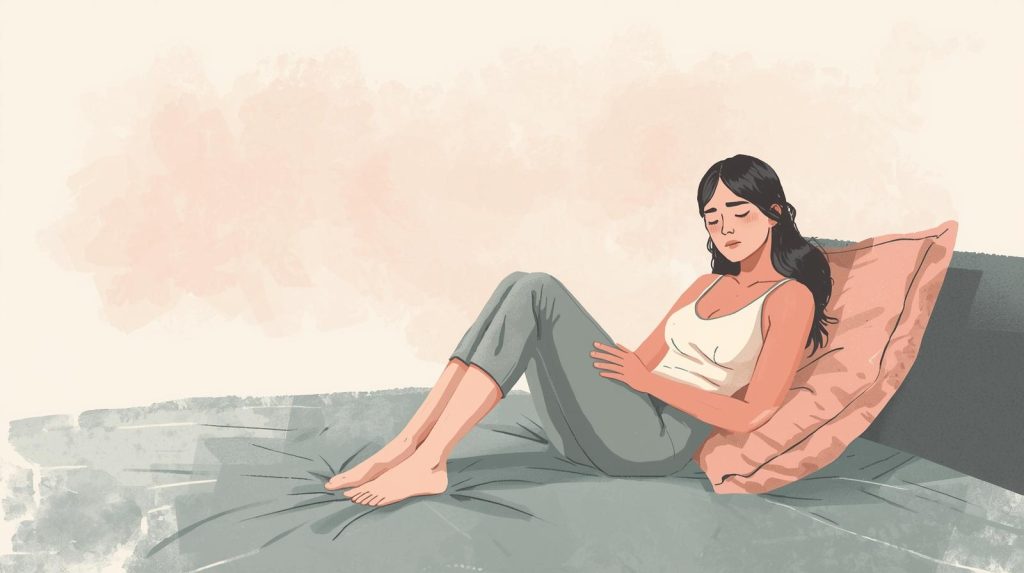
It’s the most exhausting game of pretend you never asked to play. You’re standing in the middle of a grocery aisle, or maybe at a family BBQ, and on the outside, you look “fine”. You’ve brushed your hair, you’re standing upright, and you might even be cracking a joke. But inside? Inside, your nervous system is screaming. Your joints feel like they’re filled with glass, or your brain is so foggy you can barely remember your own middle name.
And the worst part isn’t even the pain. It’s the silence. It’s the way you look at the people around you, people who love you, and realise they have absolutely no bloody idea what is happening behind your eyes. That, right there, is the gut-punch of invisible illness isolation. It’s a specific kind of lonely that settles into your bones when your reality is invisible to everyone but you.
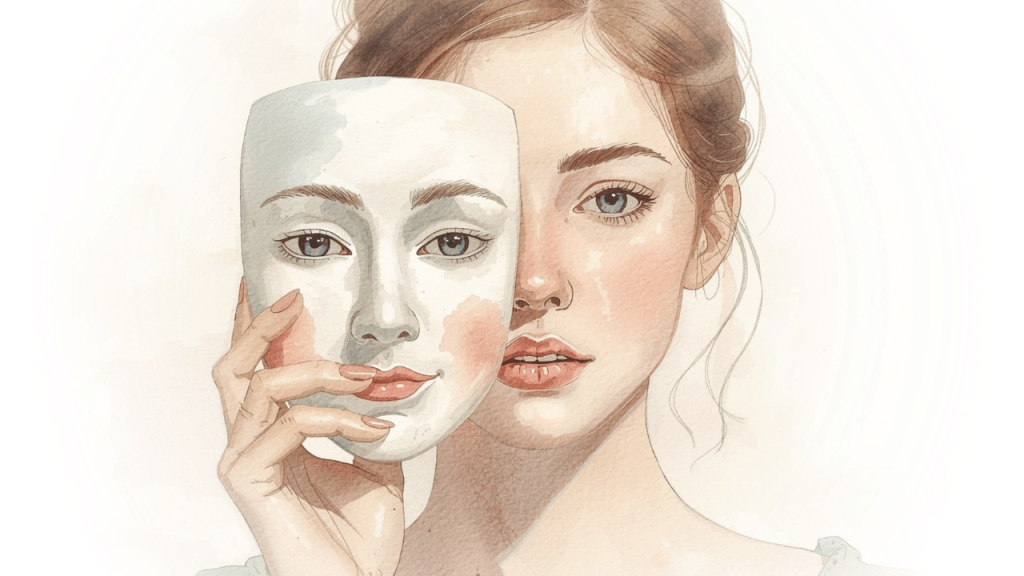
The Heavy Weight of the “I’m Fine” Mask
For a long time, I thought if I just tried harder to look normal, I’d feel normal. I spent years perfecting the art of “masking.” I’d push through the FND flares, the crushing exhaustion, and the sensory overload just so I wouldn’t make anyone else uncomfortable. I’d show up, smile, and then spend three days in a dark room recovering from the sheer effort of existing in public.
But here’s the shit part: when you get too good at masking, people actually believe you’re okay. They stop asking how you’re really doing because you look “so well.” They invite you to things you can’t possibly do, and when you say no, they think you’re just being difficult or “flaky.”
This creates a massive wall of invisible illness isolation. You’re performing a version of yourself that doesn’t exist anymore, and the real you, the one who is hurting, scared, and grieving, is left completely alone in the dark. It’s a trauma response, really. We mask to stay safe, to avoid being a “burden,” but in doing so, we accidentally lock ourselves out of real connection. If you’ve been doing this, please know: you aren’t broken for wanting to fit in, but you are allowed to take the mask off.
When the Medical System Gaslights Your Reality
Nothing fuels invisible illness isolation quite like a doctor looking you in the eye and telling you your bloodwork is “perfect” while you can barely walk. Medical gaslighting is a trauma in itself. Whether it’s being told it’s “just anxiety,” or having your symptoms dismissed because you don’t “look sick,” the message is the same: We don’t believe you.
When the people who are supposed to help you tell you that your pain isn’t real, you start to doubt your own sanity. You wonder if you’re making it up, even as the pain pulses through your body. This hyper-independence from trauma often kicks in here; you decide that since no one believes you, you have to do everything yourself. You stop asking for help. You retreat into your own world because it’s less painful than being dismissed one more time.
According to some studies, over 50% of people with autoimmune conditions experience depression or anxiety, and a huge chunk of that is linked directly to the lack of validation from the medical community. It’s not just the illness that isolates us; it’s the systemic refusal to see us.
Why the People You Love Pull Away
It’s a hard truth to swallow, but sometimes the people closest to us are the ones who make us feel the most misunderstood. It’s rarely because they’re “bad” people. Usually, it’s because your illness is a reminder of their own powerlessness.
They want to “fix” you. They suggest yoga, or kale smoothies, or “staying positive.” When those things don’t work: because, let’s be honest, you can’t kale-smoothie your way out of a nervous system collapse: they feel like failures. To protect themselves from that feeling, they might pull away or start making comments about how you “just need to get out more.”
This is where the Spoon Theory becomes so vital, not just for us, but for them. But even with the best explanations, some people won’t get it. And that’s a specific kind of grief. You aren’t just mourning your health; you’re mourning the version of your relationships that existed before you got sick.
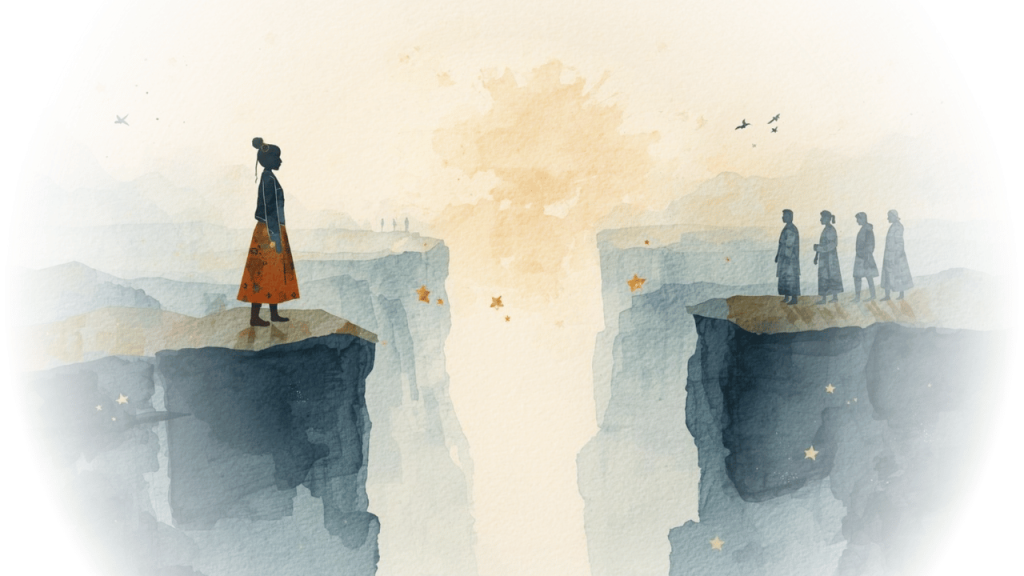
Validation Is the Antidote to Isolation
If you’re nodding along to this, feeling that heavy lump in your throat, I want you to hear this clearly: Your experience is valid.
You do not need a “normal” blood test to justify your fatigue. You do not need a visible cast to prove you are in pain. Your body is telling a story, and even if no one else has learned the language yet, that doesn’t make the story a lie.
The “Strong One” Trap
There’s another layer to invisible illness isolation that doesn’t get talked about enough: being the one everyone calls “strong.”
On the surface, it sounds like a compliment. People say it like they’re praising your resilience. Like they’re admiring how well you carry it all. But when you’re drowning, being called strong can feel like one more way your pain gets brushed aside. One more way people admire your coping instead of noticing the cost of it.
Sometimes “strong” is just code for we’re used to you handling it alone.
And that shit is isolating.
Because the truth is, for so many women with trauma, chronic illness, or both, it was never about strength. It was about survival. It was about having no bloody choice. No safe place to fall apart. No one stepping in. No real support that stayed.
“I am not strong, I have just had to cope by myself.”
That sentence holds more truth than all the praise in the world. Because what people often call strength is actually a survival tactic. It’s hyper-independence. It’s learning to keep your face steady while your insides are in chaos. It’s staying useful, capable, and low-maintenance because somewhere along the way, you realised needing comfort didn’t always get met with comfort.
So you kept going. You coped. You adapted. You became the one who could “handle it.”
But being the “strong one” can keep people at a distance too. They assume you’re fine. They assume you don’t need checking on. They assume you’ll ask if it gets bad enough, even though your whole nervous system may have been trained not to ask at all. And that is where the loneliness digs in deepest.
Because sometimes the loneliest part is not even the pain itself.
It’s knowing no one really gets it.
It’s knowing people can see you functioning and completely miss the labour it takes to stay upright. It’s being surrounded by people and still feeling emotionally stranded. It’s hearing “you’re so strong” when what you actually need is, this shouldn’t have been yours to carry alone.
If that hits something tender in you, you’re not being dramatic. You’re not ungrateful for finding the label painful. You’re recognising the ache underneath it. You wanted to be supported, not admired from a distance.
Moving past invisible illness isolation doesn’t mean you suddenly find a group of friends who perfectly understand every symptom. Honestly? That might never happen. Real healing in the post-survival phase is about learning to be the person who validates yourself. It’s about looking in the mirror on your worst days and saying, “I see you. I know how hard you’re working. I believe you.”
It’s also about finding small ways to regulate your system when the world feels too loud or too lonely. I created the 60 Second Nervous System Reset Cards for exactly these moments. When you feel that wave of isolation rising, or you’re spiralling after a bad doctor’s appointment, these cards give you a tiny, achievable way to come back to yourself. No toxic positivity: just science-backed ways to tell your body it’s safe, even when it feels broken.
Finding Your “New Normal” Without the Guilt
We often talk about “getting back to normal,” but for those of us living with chronic illness or trauma, “normal” is a ghost. Trying to chase it only deepens the invisible illness isolation because we’re constantly comparing our current selves to a version that no longer exists.
Messy healing is about reconnecting with joy after trauma in ways that actually work for your body today. Maybe your joy isn’t a mountain hike anymore. Maybe it’s the way the light hits your bed in the afternoon, or a damn good cup of tea, or the fact that you managed to wash your hair today.
These things matter. You matter. Your worth is not tied to your productivity, your health, or how well other people “get” you. You are allowed to exist in the mess. You are allowed to be tired. And you are definitely allowed to stop explaining yourself to people who aren’t committed to understanding you.
You aren’t as alone as you feel
I know it feels like you’re the only one on this planet who feels this way, but you’re not. There is a whole tribe of us: women who are “parenting from the couch,” women who are navigating the cost of living crisis with limited energy, and women who are simply trying to find a reason to smile through the fog.
We might be isolated in our physical homes, but we are connected in our shared truth. The invisible illness isolation starts to crack when we stop hiding the “ugly” parts of our journey and start speaking them out loud.
So, let’s start now.
Do you feel like the people in your life truly “get” what you’re going through? Or do you feel like you’re constantly performing a version of yourself that is “easier” for them to handle? Drop a comment below: let’s talk about the real stuff.

If this hits you hard….
You’re exactly who I write for. You don’t have to grieve this alone.
- Download my FREE 60 Second Nervous System Reset Cards
- Join our newsletter – fill out the form below
- Save this post on Pinterest so you can return to it on tough days 👉