There is a specific kind of silence that happens when you’re chronically ill but look “fine.” It’s the silence of people watching you struggle and deciding you’re just lazy. It’s the sharp, jagged edge of a family member calling you “useless” because you can’t make it to a Sunday dinner, or the cold indifference of a doctor suggesting your symptoms are just “anxiety.”
For those of us living with an invisible illness, these moments aren’t just frustrating; they are traumatic. When the world tells you that your pain isn’t real, or that your limitations are a character flaw, you learn a very dangerous survival skill: hyper-independence. You decide that if the world won’t see your struggle, you’ll bloody well do everything yourself until you collapse. You stop asking for help because help usually comes with a side of judgement or a heavy dose of medical gaslighting.
I know this dance well. Between Ehlers Danlos Syndrome (EDS), Functional Neurological Disorder (FND), and the spicy brain combo of Autism and ADHD, my life has been a constant battle of trying to prove I’m “sick enough” to deserve rest while simultaneously trying to prove I’m “capable enough” to not be a burden. It’s an exhausting, soul-crushing way to live.
The Gaslighting That Built the Mask
When you live with an invisible illness, gaslighting is your shadow. It follows you into the GP’s office, it sits at your dinner table, and eventually, it takes up residence in your own head. I spent years being told that my fainting spells were “just stress” and my joint pain was “growing pains” (even well into my twenties). When your physical reality is denied by the people who are supposed to care for you, you start to believe that you are the problem.
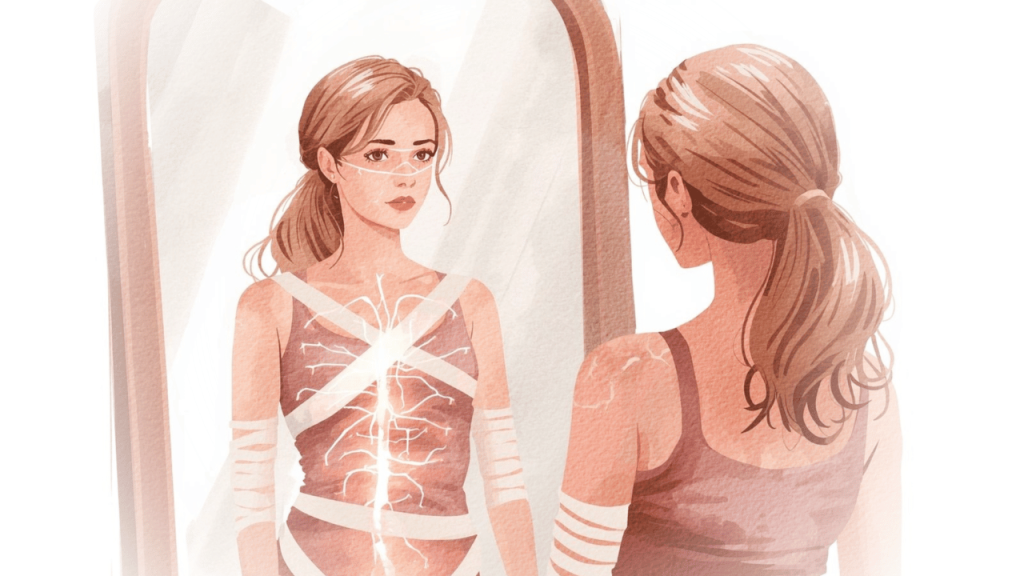
You start to internalise the word “useless.” You see your friends out living their lives, and you’re stuck on the couch, wondering why your body won’t just behave. To cope, you build a mask. You learn to smile through the FND tremors and hide the pain from the EDS. You become a master of the “I’m fine” lie.
But that mask is heavy. It’s made of the shame of being “too much” and the fear of being “not enough.” You realise that if you show the world how much you’re actually struggling, they might leave. So, you stop showing them. You become the person who does everything, helps everyone, and never asks for a damn thing in return. You become hyper-independent because, in your mind, independence is the only thing keeping you from being a “burden.”
Hyper-Independence: A Survival Strategy, Not a Skill
We often praise independence as a virtue. We’re told that being “self-made” and “strong” is the goal. But for those of us with trauma from an invisible illness, hyper-independence isn’t a strength, it’s a trauma response.
It’s a wall we build to keep out the pain of being let down. If I don’t ask you for help, you can’t tell me no. If I don’t tell you I’m hurting, you can’t tell me it’s all in my head. If I do it all myself, I’m not a burden; I’m a hero. Right?
Wrong. It’s a fast track to burnout and a direct route to worsening your symptoms. When I was at my most hyper-independent, my FND was at its worst. My nervous system was stuck in a permanent state of high alert because I didn’t feel safe enough to rely on anyone else. I was terrified that if I let the mask slip, everyone would see the “useless” person I feared I was.
Healing this requires understanding hyper-independence as trauma. It’s not about being “stronger”; it’s about learning that it is safe to be seen in your mess. It’s about realising that your worth isn’t tied to how much you can do while you’re falling apart.
When Your Body is the “Problem” (EDS, FND, and Neurodivergence)
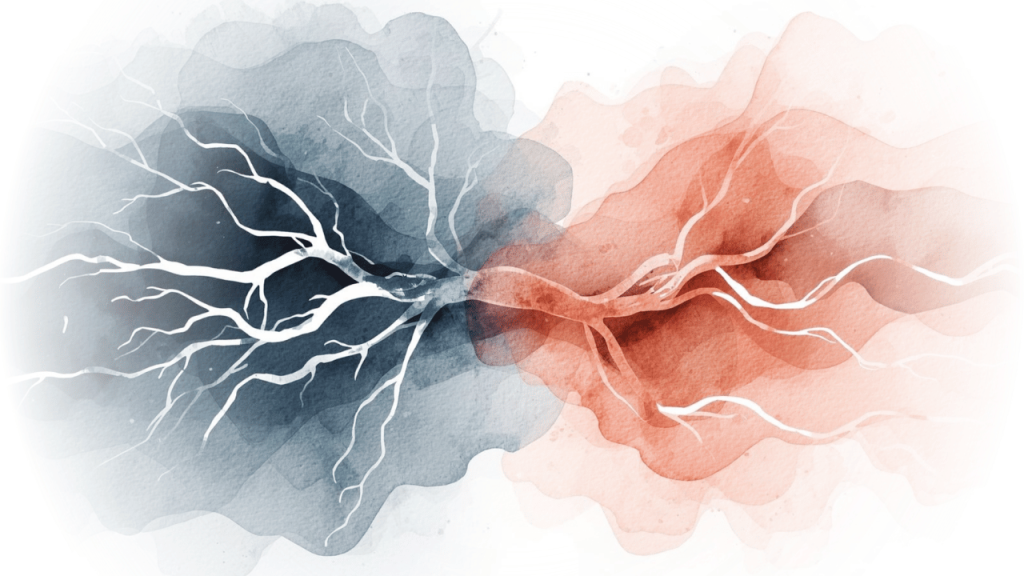
Living with EDS and FND is like living in a house where the foundations are made of jelly and the electrical wiring is constantly short-circuiting. Add Autism and ADHD into the mix, and the sensory overload alone is enough to make you want to scream.
The trauma of invisible illness is compounded when your brain and body seem to be at war. My ADHD wants me to do a thousand things at once, while my EDS reminds me that my joints are currently held together by hope and a bit of kinetic tape. The frustration of having a “fast” brain in a “slow” body is a special kind of hell.
I used to view my body as the enemy. I hated it for being “broken.” I felt like a burden to my partner and my kids. I felt like I was failing at parenting with chronic illness because I couldn’t be the “active” mum the world expects.
But here is the truth I had to fight to believe: My body is not the problem. The lack of support, the societal expectations, and the medical dismissal are the problems. My body is just trying to survive in a world that wasn’t built for it. And your body is doing the same. You are not “useless” for having limitations. You are bloody incredible for navigating a world that refuses to see your pain.
Reclaiming Worth: Moving Past the “Burden” Narrative
How do we stop feeling like a burden? How do we heal the trauma of being told we are “too much”?
It starts with the most difficult work of all: validation. You have to stop waiting for your family, your doctors, or your friends to “get it.” They might never. You have to be the one who looks at your own life and says, “This is real. This is hard. And I am doing my best.”
One of the most transformative things for me was learning to reconnect with joy after trauma. Not the “toxic positivity” kind of joy where you pretend everything is perfect, but the messy, quiet joy of finding a small moment of peace in the middle of a flare-up.
It also meant learning to regulate my nervous system. When you’ve been gaslit and dismissed, your body is in a constant state of “fight or flight.” You are waiting for the next person to roll their eyes at you or the next doctor to tell you to lose weight and do yoga. I had to learn how to tell my body it was safe.
If you’re struggling with this right now, I created something for exactly this moment. My 60 Second Nervous System Reset Cards are designed for the times when the world feels too loud and your body feels too heavy. They are tiny, manageable tools to help you come back to yourself without the pressure of a 40-minute meditation.
Tiny Steps to Stop Being “The Hero”
Healing from the trauma of invisible illness isn’t a linear path. It’s a slow, often frustrating process of unlearning the need to be “useful” to be worthy.
Here are a few things that actually helped me:
- Practice Saying “I Need Help”: Start small. Ask someone to grab you a glass of water or help with a 5-minute task. It will feel like shit the first few times. Do it anyway.
- Audit Your Circle: If people in your life continue to call you “useless” or dismiss your pain, they don’t deserve a front-row seat to your life. Protecting your energy is a survival necessity, not a luxury.
- Acknowledge the Grief: You are allowed to be sad about the life you thought you’d have. Mourning your lost future is a vital part of healing.
- Rest as Resistance: In a world that demands productivity, resting while you’re sick is a radical act of self-love.
- Find Your People: Connect with others who have an invisible illness. There is nothing quite like the relief of someone saying, “Me too,” without you having to explain a single symptom.
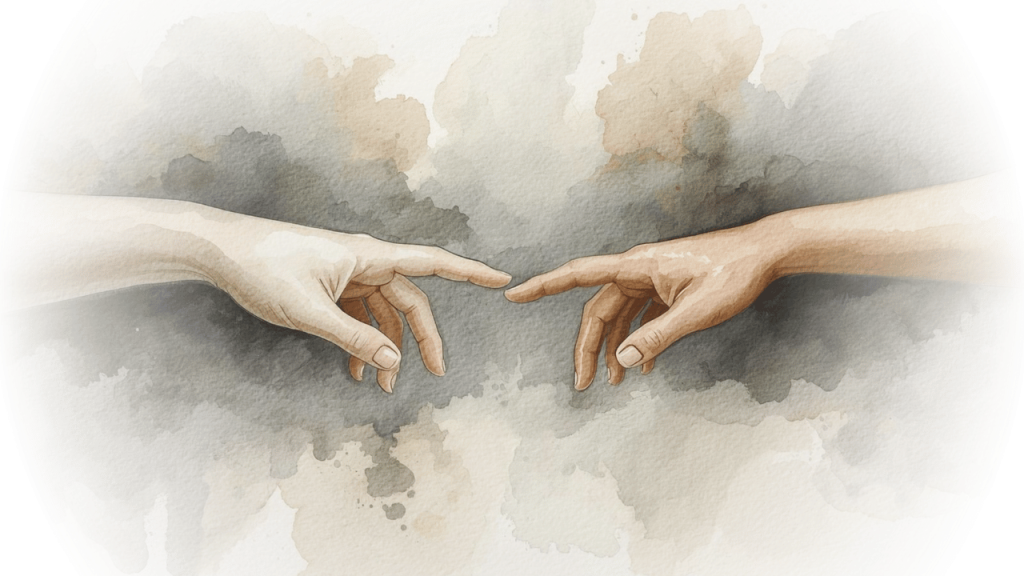
You Are Not Broken
If you have spent years feeling like a burden, I want you to hear this: You are not a problem to be solved. You are a human being who is navigating an incredibly difficult set of circumstances with very little support.
The hyper-independence that kept you safe for so long is allowed to take a back seat now. You don’t have to do it all yourself. You don’t have to prove your pain to anyone. Your value is inherent; it doesn’t decrease just because you’re having a high-pain day or because your brain is functioning differently.
We are healing the trauma of being unseen by finally looking at ourselves with compassion. It’s messy, it’s loud, and it’s bloody hard work. But you are worth it.
I want to hear from you. Have you ever felt like a “burden” because of your health? How do you deal with the pressure to be hyper-independent? Drop a comment below: let’s talk about the real stuff.

If this hits you hard….
You’re exactly who I write for. You don’t have to grieve this alone.
- Download my FREE 60 Second Nervous System Reset Cards
- Join our newsletter – fill out the form below
- Save this post on Pinterest so you can return to it on tough days 👉