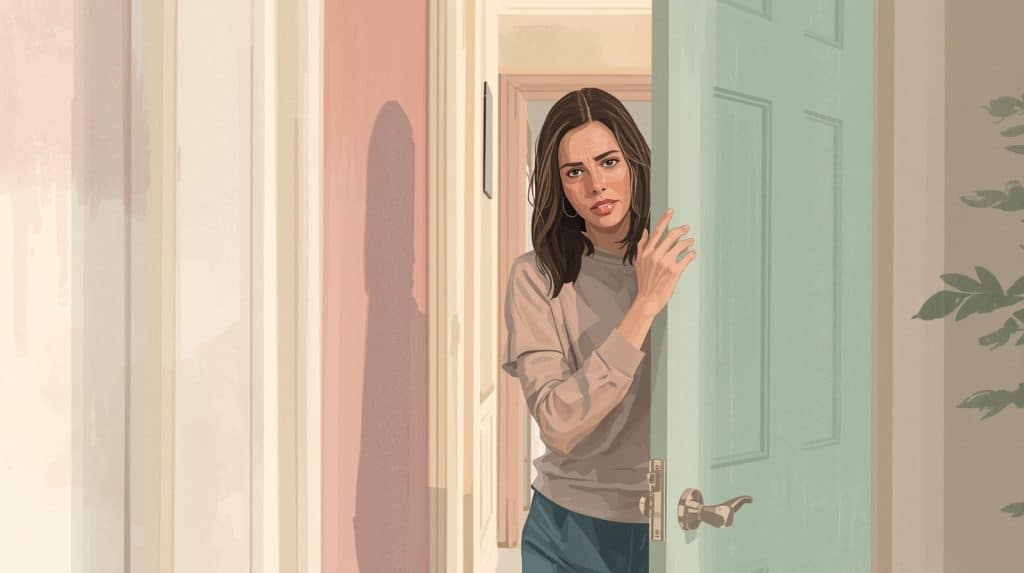
I stood at the doorway of the playroom yesterday and just stared. There were plastic dinosaurs engaging in what looked like a prehistoric riot, half-finished drawings scattered like confetti, and enough stray Lego pieces to constitute a health and safety hazard. In my before life, the one before the FND, the chronic pain, and the trauma-induced burnout, I would have spent the next forty-five minutes frantically tidying, my heart rate spiking with every toy I threw into a bin. I would have felt the pressure of being a good mum and a functional adult weighing on my chest like a lead plate.
But yesterday? Yesterday, I looked at the mess, felt the familiar throb of exhaustion behind my eyes, and I simply turned around. I closed the door (metaphorically, anyway) and went to sit on the couch with a cup of tea.
That was my slow win. And if you’re living with a body that feels like it’s constantly glitching, you’ll know that choosing to leave the playroom messy isn’t an act of laziness. It’s a win for my energy. It’s me choosing peace over the mess.
For those of us navigating slow living with chronic illness, this isn’t about some curated Instagram aesthetic involving sourdough starters and linen aprons. It’s about survival. It’s the anti-hustle. And for us, it’s absolutely non-negotiable.
Disclaimer: I’m not a doctor or therapist; I share trauma-aware insights from lived experience for educational use. Please consult your healthcare team before making changes. This post may contain affiliate links that earn me a small commission at no extra cost to you.
The Lie of the “Productive” Life
We live in a world that worships at the altar of more. More output, more side hustles, more visibility, more doing. We are taught from birth that our worth is directly tied to our productivity. If you aren’t grinding, you’re failing.
But when you live with chronic illness or you’re in the post-survival phase of trauma recovery, that hustle culture is a death trap. Your nervous system is already red-lining. Your energy envelope is often the size of a postage stamp. Trying to keep up with the able-bodied, high-vibes-only crowd isn’t just difficult; it’s physically damaging.
When I talk about slow living with chronic illness, I’m talking about the radical act of opting out. It’s acknowledging that your body has a finite amount of spoons or energy units, and you refuse to spend them all trying to look normal for a society that doesn’t understand your struggle anyway.

The “Burden” Narrative: Breaking the Trauma Loop
Let’s be honest about the hardest part of slowing down: the guilt.
If you’ve lived with trauma or long-term illness, you’ve likely been called, or felt like, a burden. Maybe it was a doctor who dismissed your symptoms as just anxiety, or a family member who sighed when you had to cancel plans again. Those words stick. They become an internal script that screams lazy, broken, useless every time you sit down to rest.
I still struggle with this every single day. There are decades of being a burden narratives encoded into my nervous system. When I choose to move slowly, that voice pipes up. “You should be doing more. Look at how much everyone else is achieving. You’re letting people down.”
But here is the truth I have to remind myself of daily: I am not a burden. My illness does not mean I am less than. I am not lazy. I deserve respect, and that includes respect from myself.
Slowing down is how we talk back to that trauma. It’s how we show our inner child that we are finally safe enough to rest. If you’ve spent years in survival mode, your brain doesn’t know how to just relax. It thinks that stillness is a threat. By choosing slow living with chronic illness, you are teaching your nervous system a new language: the language of safety.
Slow Living as a Survival Strategy (Pacing 101)
In the medical world, they call this pacing. In the wellness world, they might call it mindfulness. I call it staying alive without wanting to scream.
Slow living with chronic illness is the practical application of energy conservation. It’s about nervous system regulation as a priority over a clean kitchen. When you have conditions like FND (Functional Neurological Disorder), EDS, or chronic fatigue, your body is essentially glitching. It’s sending false alarms or shutting down because the input is too much.
Pacing isn’t just doing less. It’s about:
- Scheduled Rest: Not resting when you collapse, but resting before you need to.
- Sensory Management: Recognising when the world is too loud, too bright, or too much, and retreating before the flare hits.
- Prioritising the Musts: If you only have enough energy for one big task today, does it have to be the laundry? Or could it be a five-minute play session with your kids or a moment of quiet reflection?
If you’re struggling to find that starting point, my 60 Second Nervous System Reset Cards are designed for exactly this. They aren’t about hour-long meditations (who has the energy for that?); they are tiny, achievable moments of grounding that fit into a life that’s already too full.

The Reality of “Slow Wins”
The world might see a win as a promotion or a marathon. For us, a slow win looks very different. It’s the small, gritty victories that prove we are taking our power back from the hustle.
Here are some of my recent slow wins:
- Leaving the dishes in the sun: I didn’t have the energy to dry them and put them away. I let the sun do the work. The world didn’t end.
- The messy playroom: As mentioned, I chose my peace over a tidy floor.
- Saying No without an explanation: “I can’t make it” is a full sentence. I didn’t spend thirty minutes crafting a valid excuse to justify my exhaustion.
- Choosing the Easy Meal: Using frozen veggies or ordering in because the thought of standing at the stove made my legs ache. That’s not a failure; it’s a management strategy.
These moments are where the “abundance” in She Shines Abundance actually lives. It’s not in having everything; it’s in having enough peace to exist in the mess.
Healing in the “Post-Survival” Phase
Most of us spent years just trying to make it through the next hour. We were in the storm. But what happens when the storm passes, and you’re left standing in the wreckage of your health and your old life?
This is the post-survival phase. It’s where the real work of slow living with chronic illness begins. It’s the uncomfortable transition from surviving to living with limitations. It’s about grieving the person you thought you’d be and learning to love the person you actually are, scars, glitches, and all.
Moving slower is a key part of this. You can’t heal a traumatised system by screaming at it to go faster. You heal it by being the gentle, protective friend your body never had. You heal it by validating that yes, this is bloody hard, and no, you aren’t doing it wrong just because you need a nap at 2 PM.

The Deep Dive: The Grief of Slow Living (Teaser)
I’m going to be honest with you, slow living isn’t all soft life vibes and tea. There is a deep, heavy grief attached to it. Every time we choose to go slow, we are often choosing not to do something else. We are acknowledging a boundary that we wish wasn’t there.
In my next Substack Deep Dive, I’m going to talk about that grief. The things we’ve had to give up to live this way, and how we handle the lost futures that haunt us when we finally sit still. If you haven’t already, sign up for my FREE Nervous System Reset Cards. They’re a gentle place to start if your system feels overloaded and you need something small, real, and actually doable. We’re getting into the raw, messy stuff that doesn’t always make it into a helpful blog post.
You Are Enough, Even When You Are Still
If you take one thing from this today, let it be this: Your value is not a variable. It doesn’t go up when you’re productive and down when you’re horizontal. You are a whole, worthy, and incredible human being even when you are doing absolutely nothing.
The Anti-Hustle isn’t just about slowing down your physical body. It’s about slowing down the judgment in your mind. It’s about looking at your messy playroom, your unwashed hair, and your glitchy nervous system and saying, “We are doing okay. We are safe. We are allowed to just be.”
If your system feels fried and you need a gentle place to start, sign up for my FREE Nervous System Reset Cards. They’re quick, real-life tools for the moments when everything feels like too much. And if you want to, drop a comment below and tell me your “slow win” for today.

If this hits you hard….
You’re exactly who I write for. You don’t have to go through this alone.
- Download my FREE 60 Second Nervous System Reset Cards
- Join our newsletter – fill out the form below
- Join us on Substack for real, day-to-day life updates and get new blog posts sent straight to your inbox first.
- Save this post on Pinterest so you can return to it on tough days 👉