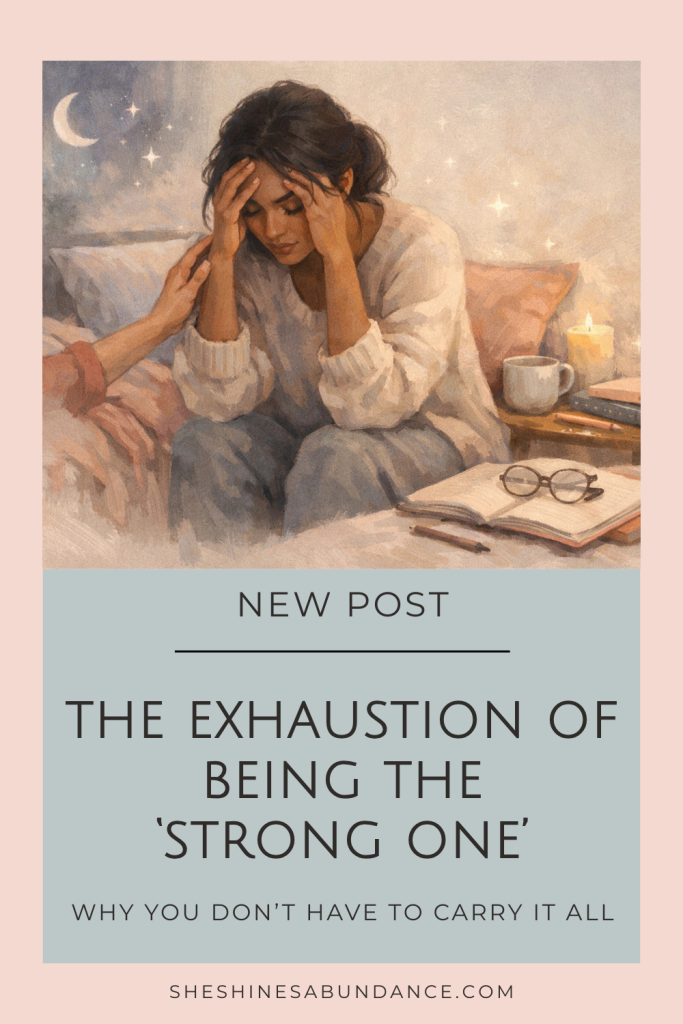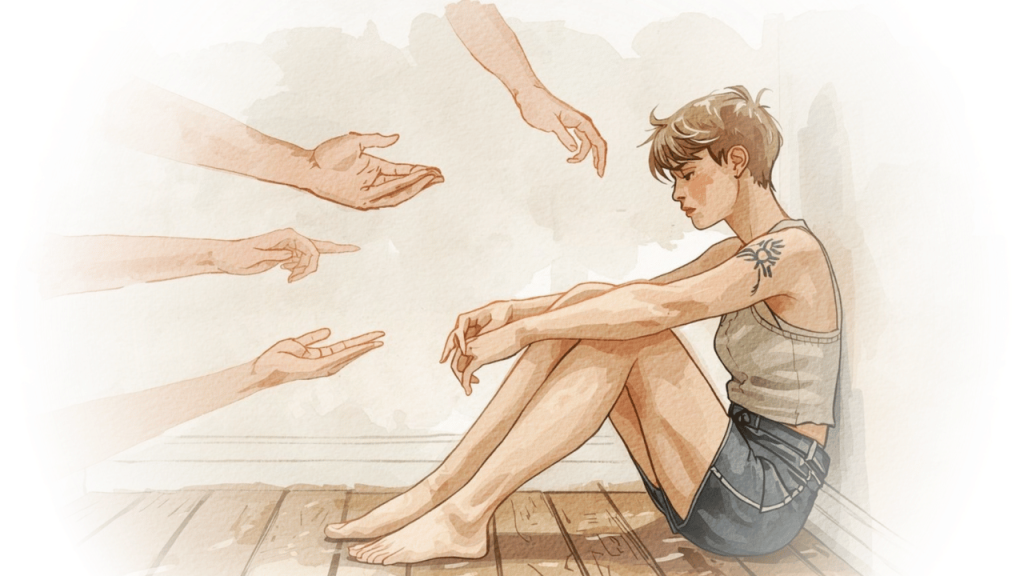
You’ve been the strong one for so long that you don’t even remember what it feels like to lean on someone else.
You’re the person everyone calls in a crisis. The one who holds it together when everything falls apart. The one who can handle anything thrown their way, because you always have.
But here’s what no one tells you: being the strong one is exhausting as hell. And that strength? It’s often not strength at all. It’s hyper-independence trauma wearing a cape.
If you’ve spent your entire life carrying everything, your pain, other people’s pain, the weight of every damn thing, this one’s for you. Because you don’t have to do it anymore.
What Hyper-Independence Actually Is (And Why It’s Not a Superpower)
Hyper-independence sounds like a good thing on the surface. You’re self-sufficient. Capable. You don’t need anyone.
But here’s the truth: hyper-independence is a trauma response.
It’s what happens when you learn, early and often, that needing people isn’t safe. Maybe they weren’t there when you needed them. Maybe they used your vulnerability against you. Maybe asking for help meant being dismissed, belittled, or let down so many times that you stopped asking altogether.

So you adapted. You became the person who doesn’t need anything from anyone. The one who can handle it all alone.
And people praised you for it. “You’re so strong.” “You’re so independent.” “I don’t know how you do it.”
But underneath all that strength is emotional exhaustion you’ve been carrying for years. Decades, maybe.
Hyper-independence isn’t about being strong, it’s about not feeling safe enough to be anything else.
Why You Became the ‘Strong One’ (It Wasn’t a Choice)
You didn’t wake up one day and decide to carry the world on your shoulders. You became the strong one because someone had to be.
Maybe you grew up in chaos and learned that your job was to hold everyone together. Maybe you were parentified, taking care of adults or siblings when you were still a child yourself. Maybe you experienced trauma and realised that no one was coming to save you, so you had to save yourself.
You became strong because being vulnerable wasn’t an option.
And now? You’re so damn good at it that you don’t know how to stop. Even when you’re exhausted. Even when you’re falling apart inside. Even when every cell in your body is screaming for rest.
You keep going because that’s what you do. That’s who you’ve always been.
But it’s not who you have to be forever.
The Real Cost of Carrying It All
The thing about being the strong one is that it costs you everything, and no one ever sees the price you’re paying.
Here’s what emotional exhaustion from hyper-independence actually looks like:
- You’re constantly tired, even when you’ve “rested”
- You feel resentful when people need you (and then guilty for feeling resentful)
- You don’t know how to ask for help, even when you desperately need it
- The thought of being vulnerable with someone makes you want to run
- You feel like you have to earn love by being useful or capable
- You can’t remember the last time you let yourself truly relax
- You’re terrified of being a burden, so you’d rather suffer in silence
- You feel deeply alone, even when surrounded by people
Sound familiar?
This isn’t strength. This is survival mode dressed up as self-sufficiency.
And the worst part? People around you have no idea how close you are to breaking. Because you’re so good at holding it together that they assume you’re fine.

You’re not fine. And you shouldn’t have to be.
You’re Allowed to Be ‘Weak’ (Spoiler: That’s Not What This Is)
Here’s what I need you to hear: needing help doesn’t make you weak.
Being tired doesn’t make you weak. Crying doesn’t make you weak. Admitting you can’t do it all doesn’t make you weak.
What society calls “weakness” is actually just… being human.
You’ve been told your whole life that vulnerability is dangerous. That needing people means you’re broken or pathetic or too much. That if you can’t handle everything alone, you’ve somehow failed.
That’s bullshit.
Vulnerability isn’t weakness. It’s courage. It takes more strength to admit you’re struggling than it does to keep pretending you’re fine.
And letting people help you? That’s not a character flaw. It’s connection. It’s trust. It’s the thing that makes us human instead of machines designed to just keep functioning no matter what.
You’ve spent so long being strong for everyone else. What if, just for a moment, you let yourself be soft instead?
What Letting Go Actually Looks Like (Tiny Steps, Not Giant Leaps)
If you’ve been carrying everything alone for years, the idea of “letting go” probably feels impossible. Or terrifying. Or both.
So let’s not make this some big dramatic shift. Let’s make it tiny. Manageable. Real.
Here’s what putting down the weight might actually look like:
- Saying “I’m struggling” to one person you trust
- Asking someone to pick up milk on their way over instead of doing it yourself
- Accepting help when it’s offered instead of automatically saying “I’m fine” – I still struggle with this
- Admitting you’re tired without immediately following it with “but I’m okay”
- Setting a boundary around what you can realistically handle
- Letting yourself cry without trying to fix it or make it stop
- Resting without earning it first – another one I still struggle with
Notice how none of these are huge, life-changing things? That’s intentional.
You don’t have to dismantle your entire identity as the strong one overnight. You just have to take one small step toward letting someone else share the load.
And yeah, it’s going to feel weird. Maybe even wrong. Your nervous system is wired to keep you in control, to keep you safe by not needing anyone.
But being alone isn’t the same as being safe.

The Permission You’ve Been Waiting For
You’re waiting for someone to tell you it’s okay to stop being strong all the time.
So here it is: You’re allowed to rest. You’re allowed to need people. You’re allowed to fall apart. You’re allowed to not have your shit together.
You don’t have to earn the right to be cared for. You don’t have to prove you’re “struggling enough” to deserve support. You don’t have to wait until you’re completely broken before you’re allowed to ask for help.
You can need someone today. Right now. Even if you’ve been fine on your own for years.
The hyper-independence trauma that’s kept you going all this time? It protected you when you needed it. But it’s okay to let it go now. It’s okay to trust that you can be held without falling apart. That you can be vulnerable without being destroyed.
You were never meant to carry it all alone.
And honestly? You don’t have to anymore.
When You’re Ready to Start Healing
If you’re recognising yourself in this post: if you’re exhausted from being the strong one and you’re ready to try something different: you don’t have to do this alone either.
Healing from hyper-independence and emotional exhaustion takes time. It’s not about fixing yourself or becoming someone new. It’s about learning that you’re allowed to exist without carrying the world.
If you’re looking for gentle support, the Nervous System Reset Cards might help. They’re designed for moments when you need to regulate but don’t have the energy for anything complicated. Just small, grounding practices you can return to when everything feels too heavy.
And if you want to explore more about trauma responses and what healing actually looks like, check out Silent Signs of Trauma. Sometimes just understanding what’s happening in your body can make it feel a little less overwhelming.
You Don’t Have to Be Strong Anymore
Here’s the thing about being the strong one: it’s a role you took on because you had to. Because no one else was going to hold things together. Because vulnerability felt like a luxury you couldn’t afford.
But you’re not that person anymore. You’re not in survival mode anymore (even if your nervous system hasn’t caught up yet).
You’re allowed to put it down. All of it. The responsibility. The burden. The exhaustion of always being okay when you’re not.
You don’t have to be the strong one anymore. You can just be… you. Tired, messy, human you. The version that needs help sometimes. The version that can’t do it all. The version that’s allowed to be held instead of always being the one doing the holding.
That version of you? She deserves care too. And she doesn’t have to earn it.
So if you’re reading this and you’re exhausted: truly, bone-deep exhausted: from carrying it all, here’s your permission slip: You can stop now.
You can ask for help. You can admit you’re struggling. You can let someone else be strong while you rest.
You’ve done enough. You’ve been strong enough. You’ve carried enough.
Now it’s time to let yourself be carried for a while.

If this hits you hard….
You’re exactly who I write for. You don’t have to grieve this alone.
- Download my FREE 60 Second Nervous System Reset Cards
- Join our newsletter – fill out the form below
- Save this post on Pinterest so you can return to it on tough days 👉